The portion size illusion: why your eyes lie about food quantity
Plate size, food color, and serving context trick your brain into misjudging portions by 20–50%. Photo tracking bypasses the illusion.
arrow_back All articles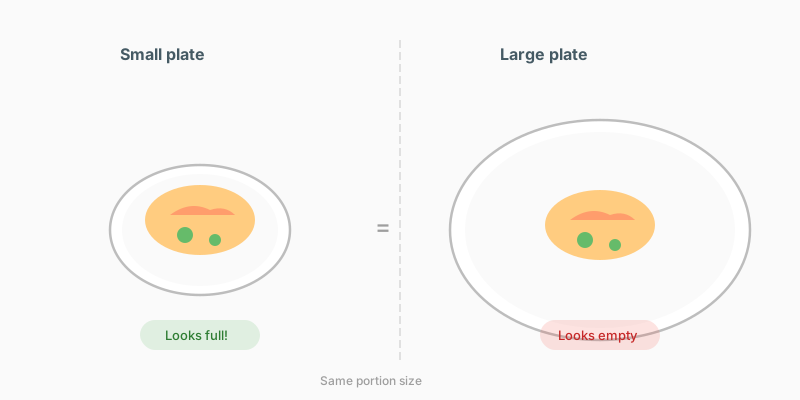
Humans are remarkably bad at estimating food quantity. Decades of research show that visual cues consistently override actual measurement — and we rarely notice.
The Delboeuf illusion on your plate
The classic finding: serving identical portions on a 10-inch vs. 12-inch plate causes people to serve themselves 22% more food on the larger plate, believing both servings are equal (Wansink & van Ittersum, 2006).
This isn't willpower failure — it's a perceptual bias hardwired into our visual system.
How much do we misjudge?
Research consistently finds:
- Plate size effect: 20–30% over-serving on larger plates (Wansink, 2004)
- Tall vs. wide glass: People pour 20–30% more into short, wide glasses vs. tall, narrow ones
- Package size: Eating from larger packages increases intake by 25–50%
- Distraction: Eating while watching TV increases intake by ~14% at that meal and ~25% at later meals (Robinson et al., 2013)
Why photo tracking works
A photograph captures the objective reality: plate size, portion relative to plate, food density. When NutritionCam's AI analyzes a photo:
- It estimates portion size from visual references (plate edge, utensils)
- It isn't biased by your expectations or memory
- Over time, your photo history shows portion drift that you'd never notice in real-time
Practical strategies
- Always photograph before eating — the photo captures what's actually there.
- Use consistent dishware — the AI learns your plates and calibrates.
- Review weekly — scroll through photos to spot portion creep.
- Let the AI estimate — don't guess calories yourself; that's where bias compounds.
Your eyes lie. The camera doesn't. That's the core advantage of photo-based tracking.
References
- Wansink, B. & van Ittersum, K. (2006). The visual illusions of food. Journal of Consumer Research, 33(3), 301–308. doi:10.1086/500219
- Wansink, B. (2004). Environmental factors that increase food intake. Annual Review of Nutrition, 24, 455–479. doi:10.1146/annurev.nutr.24.012003.132140
- Robinson, E. et al. (2013). Eating attentively: a systematic review of the effect of food intake on memory. Am J Clin Nutr, 97(4), 728–742. doi:10.1093/ajcn/nqt119