Why macro balance matters more than calorie totals
Protein, fat, and carbs each play distinct metabolic roles. Research shows that macro composition shapes body composition — even at equal calorie intake.
arrow_back All articles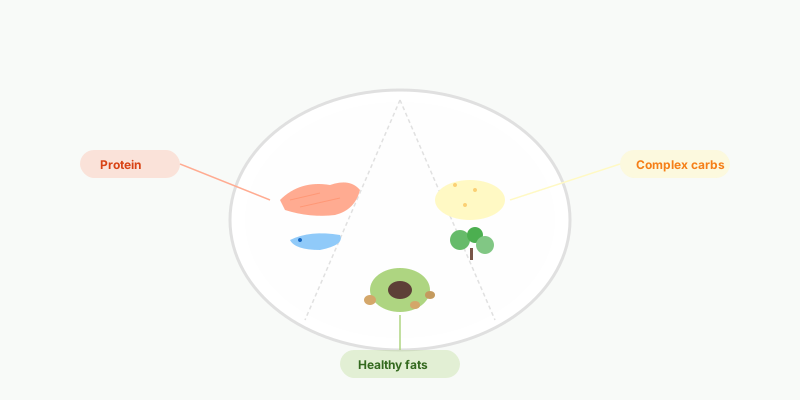
Most calorie apps reduce food to a single number. But two 2,000-calorie days can produce radically different outcomes depending on where those calories come from.
The thermic effect of food
Each macronutrient costs different energy to digest:
| Macronutrient | Thermic effect |
|---|---|
| Protein | 20–30% |
| Carbohydrate | 5–10% |
| Fat | 0–3% |
A high-protein diet at 2,000 kcal may yield only 1,500 kcal net — while the same 2,000 kcal from fat-heavy ultra-processed food nets ~1,940 kcal. This isn't a rounding error; it's a 440 kcal/day metabolic advantage (Westerterp, 2004).
Protein and muscle preservation
A 2012 randomized trial in JAMA overfed participants by 954 kcal/day for 8 weeks across three protein levels. The low-protein group lost lean mass despite a caloric surplus, while high-protein groups gained muscle. Total weight gain was similar — but body composition was dramatically different (Bray et al., 2012).
Carb quality and satiety
Not all carbohydrates are equal. A 2019 meta-analysis in The Lancet showed that high-fiber, complex carbohydrate diets reduce all-cause mortality by 15–30% compared to refined-carb equivalents — independent of calorie intake (Reynolds et al., 2019).
Fat: essential but calorie-dense
Dietary fat is essential for hormone production, cell membrane integrity, and fat-soluble vitamin absorption. But at 9 kcal/g (vs. 4 for protein/carbs), small portion misjudgments compound quickly. Photo-based tracking captures portion size visually — without needing to weigh oils.
How NutritionCam handles macros
The AI estimates macronutrient breakdown from every photo:
- Macro view: See your protein/carb/fat ratio without a calorie total.
- Trend charts: Weekly macro balance shows whether you're consistently under-eating protein or over-indexing on refined carbs.
- Coach integration: Your coach sees macro trends and can suggest adjustments without you tracking gram-by-gram.
Practical takeaways
- Prioritize protein — aim for 1.6–2.2 g/kg body weight if you train.
- Choose complex carbs — whole grains, legumes, vegetables.
- Don't fear fat — but be portion-aware (a photo catches this naturally).
- Track the ratio — even if you hide the calorie total.
Balance beats counting. When macros are right, calories tend to self-regulate.
References
- Westerterp, K. R. (2004). Diet induced thermogenesis. Nutrition & Metabolism, 1(5). doi:10.1079/NRR200389
- Bray, G. A. et al. (2012). Effect of dietary protein content on weight gain, energy expenditure, and body composition during overeating. JAMA, 307(1), 47–55. doi:10.1001/jama.2012.6607
- Reynolds, A. et al. (2019). Carbohydrate quality and human health: a series of systematic reviews and meta-analyses. The Lancet, 393(10170), 434–445. doi:10.1016/S0140-6736(18)31809-9